Ingestion for PDFs, Confluence, Drive, tickets, and DBs
AI & Software Service
Retrieval-Augmented Generation (RAG)
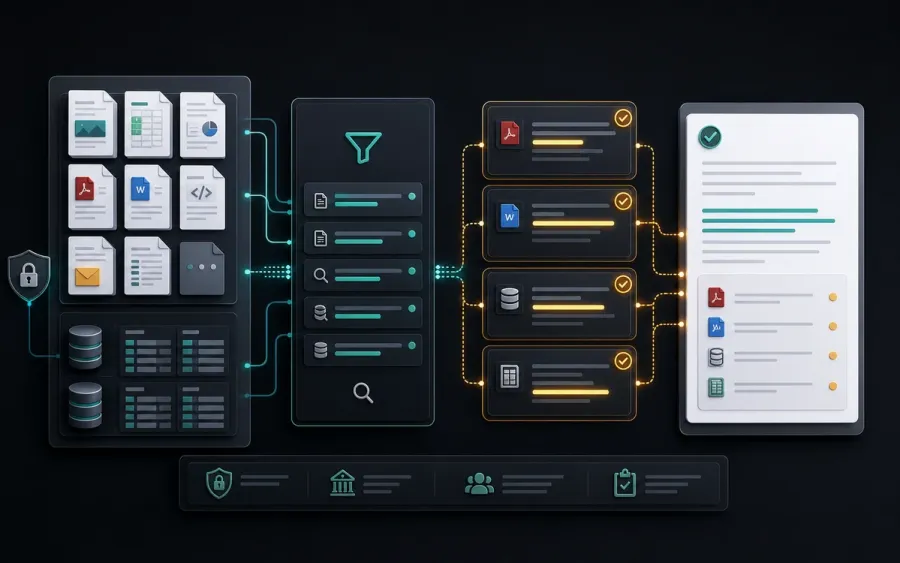
Retrieval-Augmented Generation (RAG) systems answer questions from your documents and databases — so language models stay accurate, current, and citeable for enterprise use.
- Pilot in weeks
- Global delivery
- Production guardrails
Outcomes
What we deliver
Concrete capability packages — not slideware.
Chunking, embeddings, and hybrid retrieval tuned to your corpus
Answer APIs with citations and access controls
Refresh jobs and quality monitoring
Overview
About Retrieval-Augmented Generation (RAG)
Retrieval-Augmented Generation (RAG) enhances AI models by combining real-time data retrieval with advanced language generation. It enables systems to access relevant external knowledge before producing accurate and context-aware responses. RAG improves reliability, reduces hallucinations, and ensures up-to-date information in AI applications.
This approach is ideal for enterprise knowledge systems, customer support, and data-driven decision-making.
Features
- Secure document indexing
- Vector database integration
- Hybrid search (semantic + keyword)
- Role-based access control
- Real-time knowledge retrieval
Goal
To transform enterprise knowledge into an intelligent, searchable, and reliable AI-powered system.
Delivery
How we ship Retrieval-Augmented Generation (RAG)
A clear path from discovery to live operations.
-
01
Corpus & access
Sources, permissions, and PII rules.
-
02
Index design
Chunk strategy and retrieval experiments.
-
03
Answer layer
Prompting, reranking, and citation UX.
-
04
Ops
Re-index cadence and feedback capture.
Fit
Where teams use this
Policy and SOP assistants
Product documentation Q&A
Support agent copilots
Research and due-diligence aides
Worldwide
Global delivery, local depth
We design and ship rag systems for clients worldwide — collaborating from Doha and Islamabad, with remote-friendly engagement across US, UK, GCC, and EU stakeholders.
- DohaQatar
- IslamabadPakistan
- RemoteGlobal
Related
Explore next
FAQ
Frequently asked questions
Is RAG better than uploading files into a chatbot?
Yes for enterprises. Production RAG separates indexing, permissions, evaluation, and answer generation so you can scale content and control who sees what.
How often should indexes refresh?
It depends on how often source docs change. We set cadences and event-driven updates so answers stay current without unnecessary cost.